
How it works
A real plan, not a packet of advice.
Grow Pro asks four quick questions, then works from your answers for the rest of the year: what to sow, when to do it, what it saves you, and how your soil is really doing.
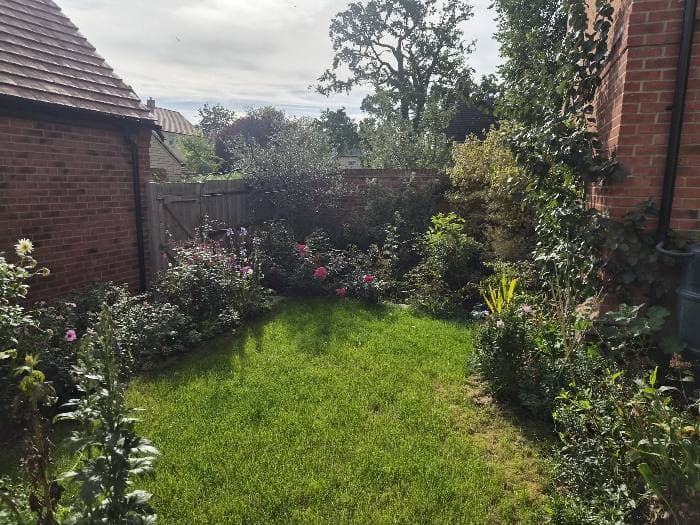
Right plant, right place
Four questions. About two minutes.
Answer four quick questions — what you grow, your postcode, your sun and your space — and Grow Pro works from your answers for the rest of the year.
01
What are you growing?
Outdoors, in a greenhouse, on a balcony, on a windowsill. The answer decides which space and sun questions you get next.
02
Where do you garden?
Your country and postcode. In the UK we resolve the frost region from the postcode; in Germany, from the postcode area. We keep the first part only.
03
Tell us about your garden
The type of space, its size and which way it faces. A room gets asked which way it faces; a windowsill has no plan to draw.
04
How much sun does it get?
A part-sun garden is a mix, so each zone can say whether it is the sunny bit or the shady bit. The designer can work it out for you later.
Bad timing, solved
A job list that moves through the year.
Sowing, planting and harvest windows for your area, plus a short job list for each month. Scrub through the year and you always know what to do, and when.
This month's jobs · example
An illustration of the year for a garden like the Cambridge example — your list is built from your own plants and your own region.
- February
- Sow tomatoes indoors
- Chit early seed potatoes
- March
- Harden off young plants
- Sow beetroot outdoors
- April
- Plant out after the last frost
- Sow French beans
- May
- Pinch out tomato sideshoots
- Sow carrots for autumn
- Stake dahlias before they flop
- June
- Water deeply in dry spells
- Pick courgettes while small
- July
- Keep cutting sweet peas
- Sow spring cabbage
- September
- Plant garlic for next year
- Clear spent crops
The designer
Draw it once. The sun gets measured.
Draw your garden as it really is. Draw a shape, say what it is — a border, a greenhouse, a patio — and it becomes a numbered zone. The plants you have already picked for that zone drop straight in, spaced as they need to be.
- The designer steps the whole day in half-hours, counting the time a spot is not inside a shadow — cast by your boundaries at the heights you type, by anything built on the plan, and by any tree.
- Six hours of direct sun counts as full sun, three as part sun, and below that as shade — the same bands a garden centre uses, so the words match what a plant label says.
- Every zone you draw is a real zone: the same calendar, the same soil, the same doses as everything planted in it.
Without knowing which way your garden faces, we will not overwrite what you told us. A figure worked out against an assumed south is a guess, and a guess must not replace the one thing you actually told us.
Sun & north
June · 13:00
Edge of the dial: the horizon. Middle: straight overhead.
Seen from the house, your garden faces south.
Direct sun on a June day
- Zone 1full sun6h 55m
- Zone 2part sun5h 25m
- Zone 3shade2h 30m
- Zone 4full sun12h 35m
The money
See it pay for itself.
Every plant carries a grocery-saving estimate based on UK retail prices. Watch the running total climb as you add to your plan, so the garden pays for itself across the season.
- Log what you pick and we will show you how close you get to the estimate.
- Add what you spend and we will show you where you really stand — the app only ever claims a net position for a gardener who has told it what they spend.
£132
a year, in an example plan of 16 plants.
Fruit, veg, herbs and cut flowers at shop prices. This is an example plan for a garden in Cambridge, not a figure worked out for yours.
Honest limits
What it does not do yet.
We are building Grow Pro in the open, and it is better to say where the edges are than to let you find them.
We are in early access
Grow Pro is in early access and we are building it in the open. Things change as we learn, and the paid extras wait on the waiting list — we charge nothing for them yet.
The sun figure can be wrong
The designer works out sun from your drawing: which way the garden faces, the heights of what surrounds a zone, the season. Winter shadows are the hardest case, and when the answer is uncertain we say so and keep what you told us.
We do not guess your soil
From your postcode we can say what your ground is likely to be made of, but texture and free chalk come from your own hand tests, not from us. A laboratory test measures exactly what it measures — nothing more.
The advice is curated, not generated
What we say about plants, soil and timing is written and curated from published sources. It is not AI output, and nothing you type goes to an AI service. A recommendation is not a promise of a result — sometimes the right advice is not to feed at all, and the app says so.
How it works FAQs
The questions that come up along the way.
Do I need a card to start?
No. Nothing is charged at sign-up and no card is taken. You can plan a full year of gardening, draw your zones and keep your journal without a payment method ever touching the app.
How does the designer work out the sun?
It steps the whole day in half-hours, counting the time a spot is not inside a shadow — cast by your boundaries at the heights you type, by anything built on the plan, and by any tree. Six hours of direct sun counts as full sun, three as part sun, and below that as shade — the same bands a garden centre uses. Without knowing which way your garden faces, it will not overwrite what you told us.
Why do you need my postcode?
The postcode is how the plan knows your frost dates, your likely soil and your local growing windows. We store the first part only — for example M1 — never your full postcode, and the plan works from the area rather than your street.
Can I use Grow Pro on a phone?
Yes. Grow Pro runs in the browser on a phone, tablet or computer, and there is an iPhone and Android app. The garden designer is built for touch as well as a mouse, and every control meets the 44-pixel target that makes outdoor, one-handed use realistic.
Is the gardening advice written by AI?
No. What we say about plants, soil and timing is written and curated from published sources. It is not AI output, and nothing you type is sent to an AI service. A recommendation is not a promise of a result — soil takes time to change, and sometimes the right advice is to add nothing.

Ready to plan your garden?
Build your plant list, follow the monthly jobs, and watch the savings add up.